
Original Art vs Prints: What’s the Difference and Does It Matter?
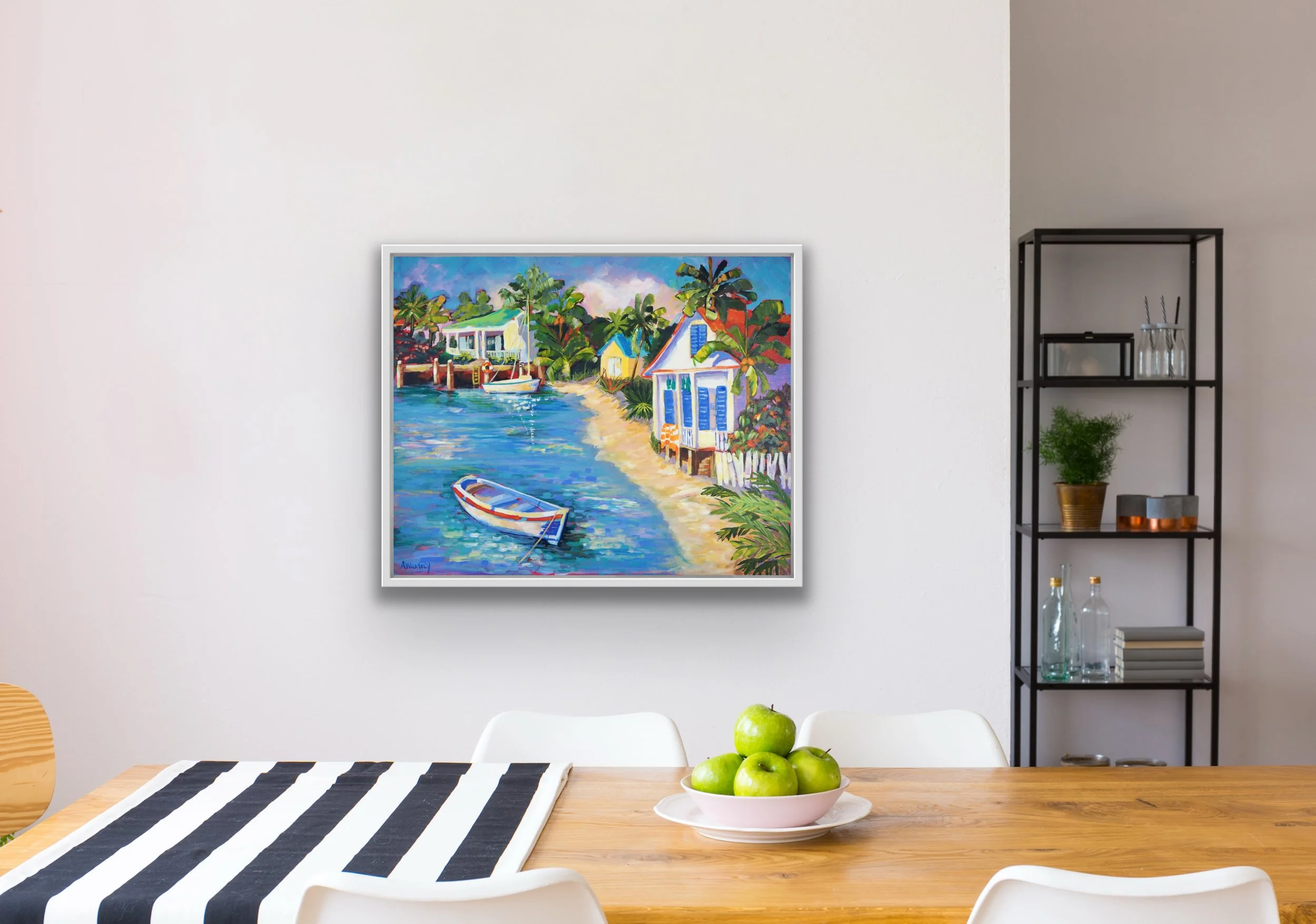
An original artwork brings feeling and life to a space. ‘Blue Shutters, Bahamas’- by Anne Whately
Original Art vs Prints: What's the Difference, and Does It Matter?
A print of a painting and the painting itself can look almost identical online. Same colours, same composition, same image. Scroll past either one and you might not clock the difference straight away.
So what's actually different? And does it matter which one you choose?
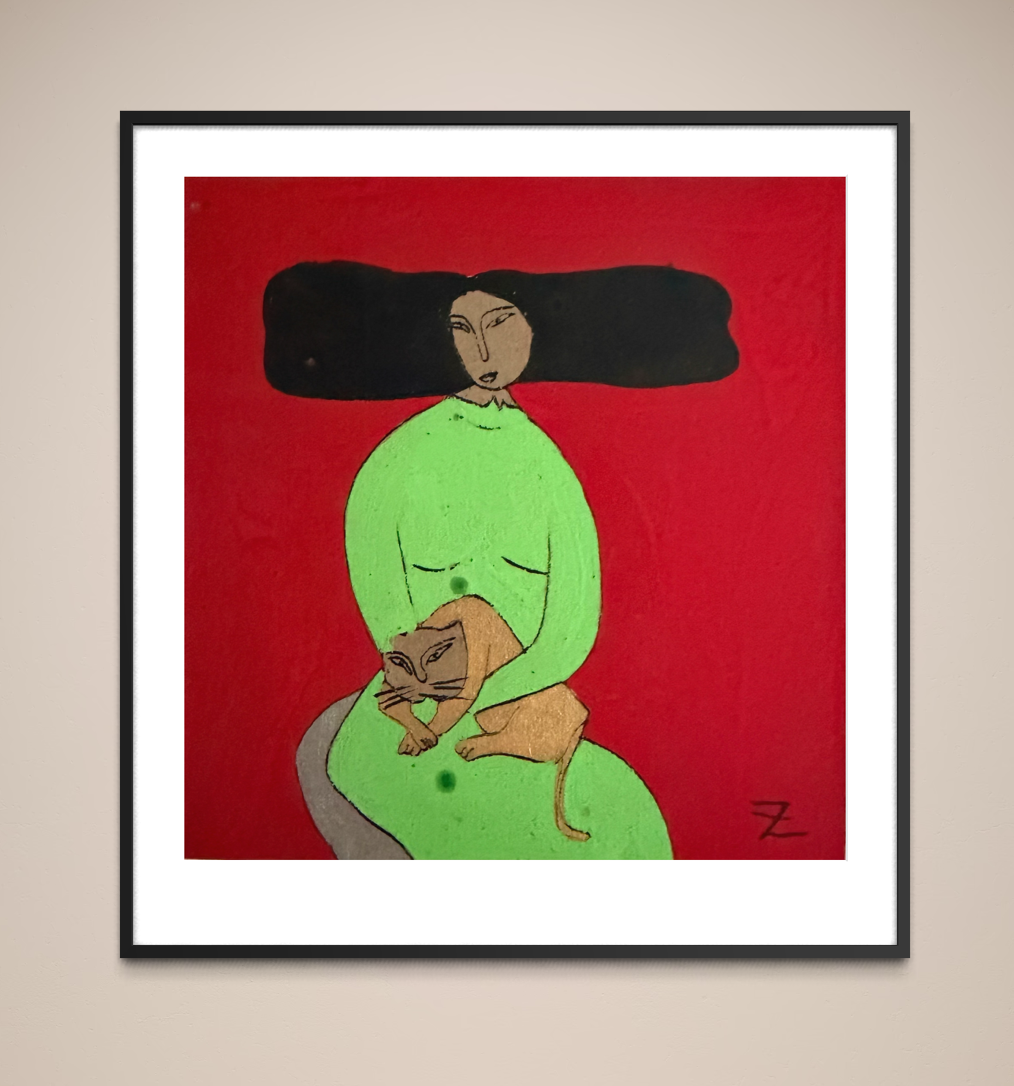
An original artwork purchased in Vietnam. You cannot see the cat painted in gold leaf as that’s only visible on the original. Some things just don’t print well.
Why is an original special?
An original is the thing itself. The actual canvas I stood in front of, laying down the first brushstrokes, deciding which colours and shades I needed to use, what my mind was saying on that particular day. It can be the texture. That cannot be accurately represented with prints. You possibly can get a hint of what the texture is like depending on how the light has bounced off when photographing.
I can tell you honestly, I agonize over the simplest things trying to get a painting to feel the way I want it to feel. A particular blue that's almost right but not quite. A line that needs to be looser than my instinct wants it to be. Sometimes I'll repaint one small section of a piece four or five times before it finally matches what's in my head. None of that struggle shows up in a print. It only lives in the original, even when you can't see it directly, because it's the reason the piece looks the way it does. Often you can see up close, where I’ve altered something. and I’m happy with that. It’s not about perfection or an exact rendition. It’s about feeling.
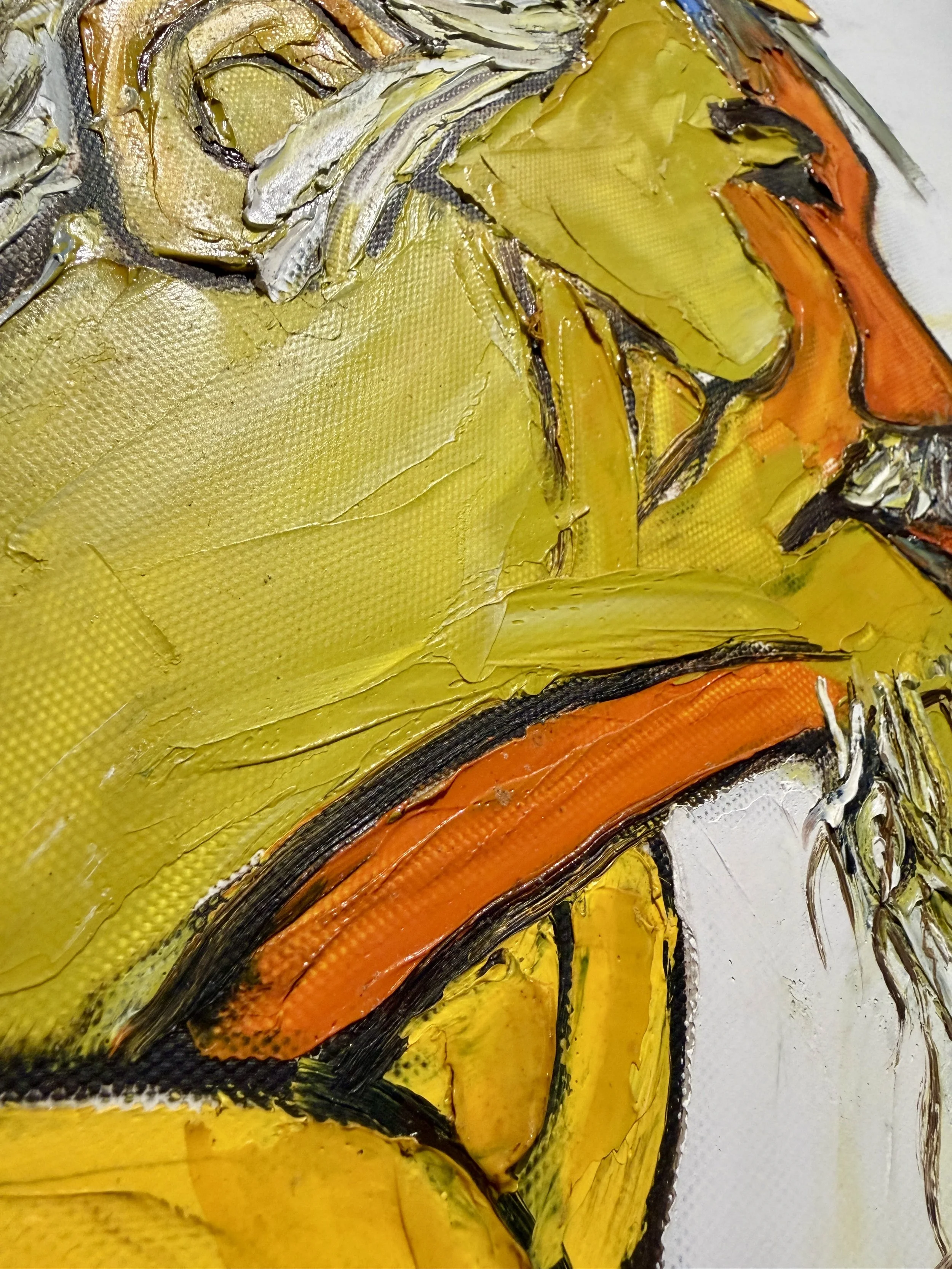
Close up shot of an original in my home that was painted in oils by the Vietnamese artist Van Tho.
What are prints exactly?
There's a fair bit of confusion around this, so worth clearing up.
An open edition print means there's no limit on how many can be made. As many as there's demand for, at whatever size you select.
A limited edition print is capped at a set number, usually numbered and signed by the artist. Once that number sells out, that's it. No more get made. Often artists add a small hand applied gesture or nuance so it has an original touch. Usually these are more expensive.
A giclée print refers to the printing method itself. It's a high quality process using archival inks on proper fine art paper, which is why it holds up so much better over time than a standard poster print.
None of these are lesser than each other exactly. They're just different products, serving different purposes.
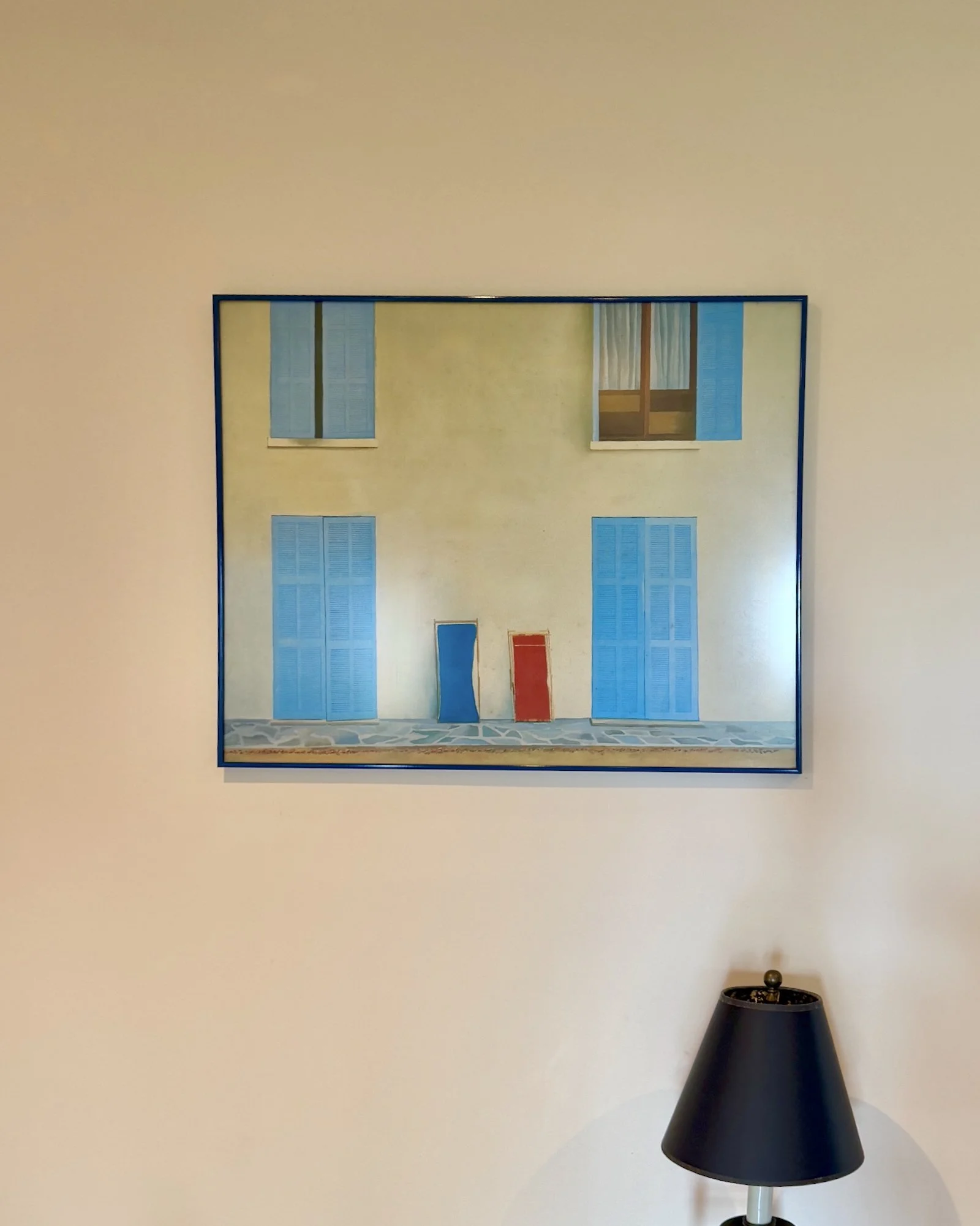
My own Hockney prints.
I couldn't always afford originals either.
Years ago I visited New York and went to MOMA, and that's where I first properly met David Hockney's work. Not in a book. Not on a screen. In the room, in colour, at scale. I couldn't have afforded an original of his if I'd tried. So I brought home two prints from the exhibition instead.
They're still on my walls today. Sitting amongst my own original work, along with original pieces by other artists, some of which we've discovered on our travels, and amongst several limited editions we've collected along the way. I don't think of them as the cheaper option sitting quietly in the corner. They're part of the collection, exactly as much as everything else on that wall.
What you're actually buying when you buy an original.
This is the part that's harder to put into words, but I'll try.
When you buy an original, you're not just buying an image. You're buying the object itself, and everything that went into making it. The hours. The version that didn't work, that got painted over before the one you're looking at emerged. The particular mood I was in that day, whether I knew it or not, because it always ends up on the canvas somehow.
You're also, in a quiet way, buying a relationship.with the artist especially if you bought directly. To the story of how you found the piece and why it stopped you in your tracks. Some collectors I know (myself included) can tell you exactly where they were standing when they saw the work that changed how they thought about collecting.
None of that transfers to a print. A print gives you the image. An original gives you the moment it came from.
Why originals cost what they cost.
People sometimes look at the price difference between an original and a print of the same image and assume the original is simply marked up for the sake of it.
It isn’t. The original took days, sometimes weeks, to make, and it only exists once. A print can be made as many times as there's demand for it, so the cost per unit drops enormously. You're not paying more for the original because someone decided to charge more. You're paying for something that, by definition, cannot be replaced or repeated.
So does it actually matter?
Honestly, it depends on what you're after.
If what you want is the image itself, on your wall, at a price that suits a smaller budget, a good print does that job perfectly well. There's real skill and real value in a well made giclée print, (an advanced, high-resolution digital inkjet printing method used to create museum-quality fine art reproductions) and I don't think anyone should feel like they're settling for less by choosing one.
If what you want is the object itself, the thing an artist actually made with their hands, and everything that comes with owning something that exists nowhere else, that's what an original gives you that nothing else can.
Neither answer is wrong. They're just answering different questions.
When a print makes sense, and when it doesn’t.
A print makes sense when you love an image but the original is out of reach, when you want to test whether a piece works in your space before committing further, or when you simply want more art on your walls without the budget of collecting only originals.
Prints are also a genuinely excellent way to start introducing art into your home in the first place. If you've never collected before, a print lets you begin without the pressure of a big decision. It's a way of figuring out what you actually love, and just as importantly, what you don't, without spending a fortune to find out.
And sometimes a print is how you meet an artist. You might come across someone whose work you're drawn to, but they haven't yet painted the piece that feels like it was really and truly made for your wall. A print lets you bring a little of their work home anyway, and stay close to what they do, while you wait for that one to come along.
An original makes more sense when a particular piece has genuinely stopped you in your tracks. When you find yourself going back to look at it again. When you can picture exactly where it would hang, and what it would feel like to walk past it every day.
I’ve done exactly this. A beautiful piece I discovered online. I contacted the artist and asked for the price. No, it was not cheap but I found that when I went to sleep that night, and the one after, the thought of someone else buying it first filled me with dread. It had spoken to me and it brought back a lovely memory that was very strong. It now hangs proudly in a special place and I’ve not regretted the purchase one little bit!
I will be offering prints of some of my own work at some point, for exactly this reason. Not as a lesser version of the original, but as a way for people to bring a piece into their home that might otherwise be out of reach, while the originals remain exactly that. Original. One of a kind. Never repeated.
If a piece of beautiful art speaks to you, there's no wrong way to bring it home. Just the way that's right for you.
Browse original works here or subscribe to my newsletter for when prints will be available.