
How to Start an Art Collection — A Beginner's Guide
Art collecting sounds like something other people do.
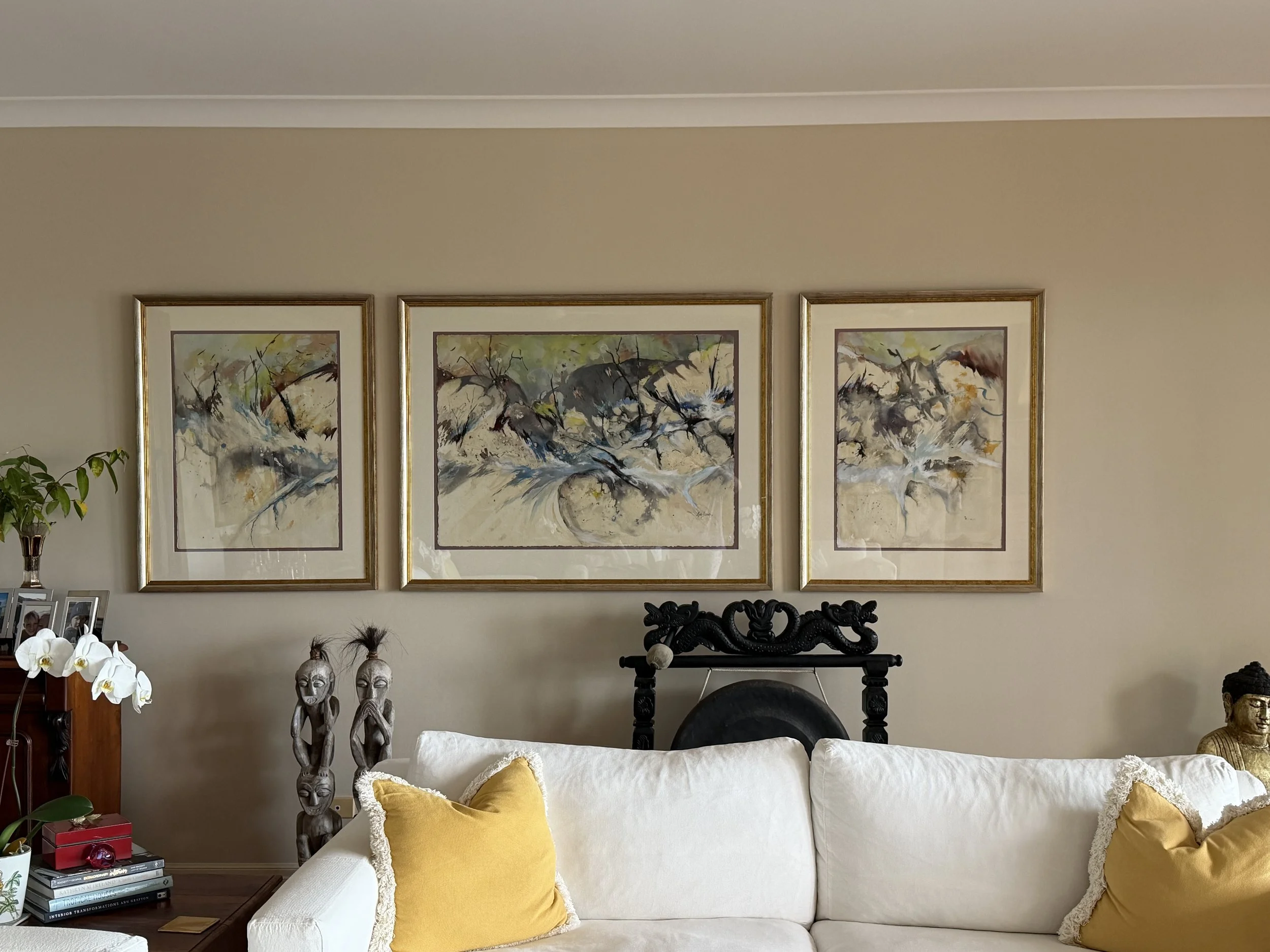
Eula Jensen — The Boulders series, in situ. Photo courtesy of Anne Whately Private Collection
How to Start an Art Collection - A Beginner’s Guide.
Art collecting sounds like something other people do.
People with big houses, strong opinions, and a dealer on speed dial. But the truth is most serious collections started the same way — with one piece someone couldn't stop thinking about.
That's it. That's the beginning.
Art can be the most compelling feature in a room, and unlike furniture, it tends to stay. Pieces are kept for decades, passed through families, carried from house to house. A collection builds slowly and almost accidentally — but it builds from that first decision.
Here's how to start.
Buy the piece you can't walk away from.
The most important question isn't "will it go with my sofa." It's "have I thought about this three times today."
If you keep coming back to something — scrolling back to it on your phone, thinking about it the next morning — that's not indecision. That's the painting telling you something.
I came across Fran Hosker's work on Instagram one evening. A still life — Mediterranean light, oranges, shadows in that particular blue you only find in southern Europe. It connected me instantly to Positano Italy, a place that holds very personal memories for me.
I left it for a week deliberately. I wanted to know if it was a just a whim.
It wasn't. If anything the pull got stronger. I found myself hurrying to buy it before anyone else could — missing out would have been a genuine regret. It now hangs exactly where it belongs.
It was the painting proving to me that it belonged there.
Trust that feeling. It doesn't lie.
Everything else — size, framing, where it'll hang — can be worked out later.
The feeling can't be manufactured.
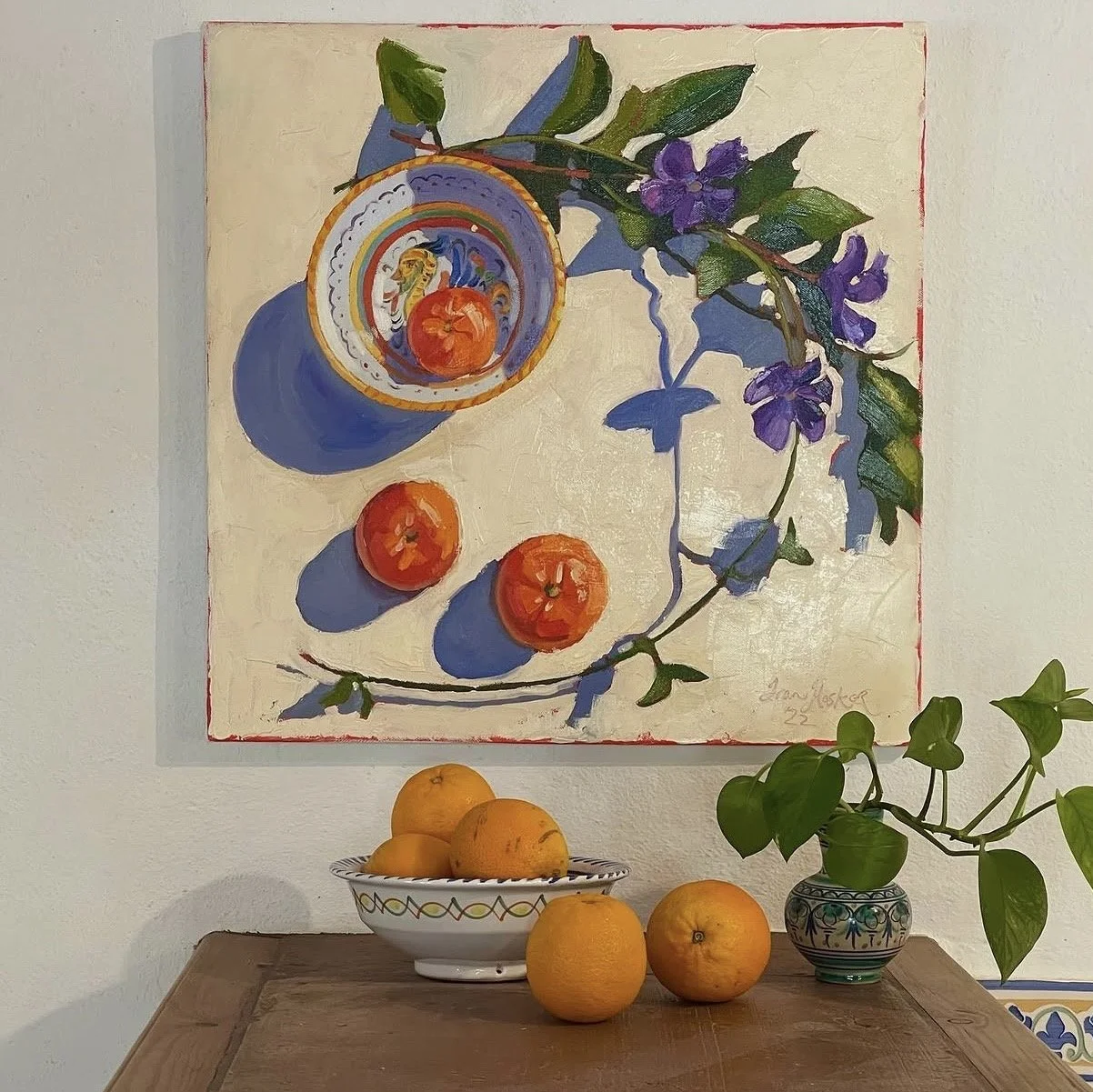
Oil painting by Artist Fran Hosker. Photo - Courtesy of Anne Whately Private Collection
Know the difference between an original and a print.
They can look almost identical on screen. In a room, they feel completely different.
A print — even a high quality limited edition — is a reproduction. An original painting is a singular object. There is one of it in the world and it's on your wall. That distinction matters, not because one is better than the other, but because they're different things and it's worth knowing which you're buying.
I have a limited edition Ray Crooke in my collection with the Title and signature handwritten by the Artist. It's a considered, valuable piece and I love it.
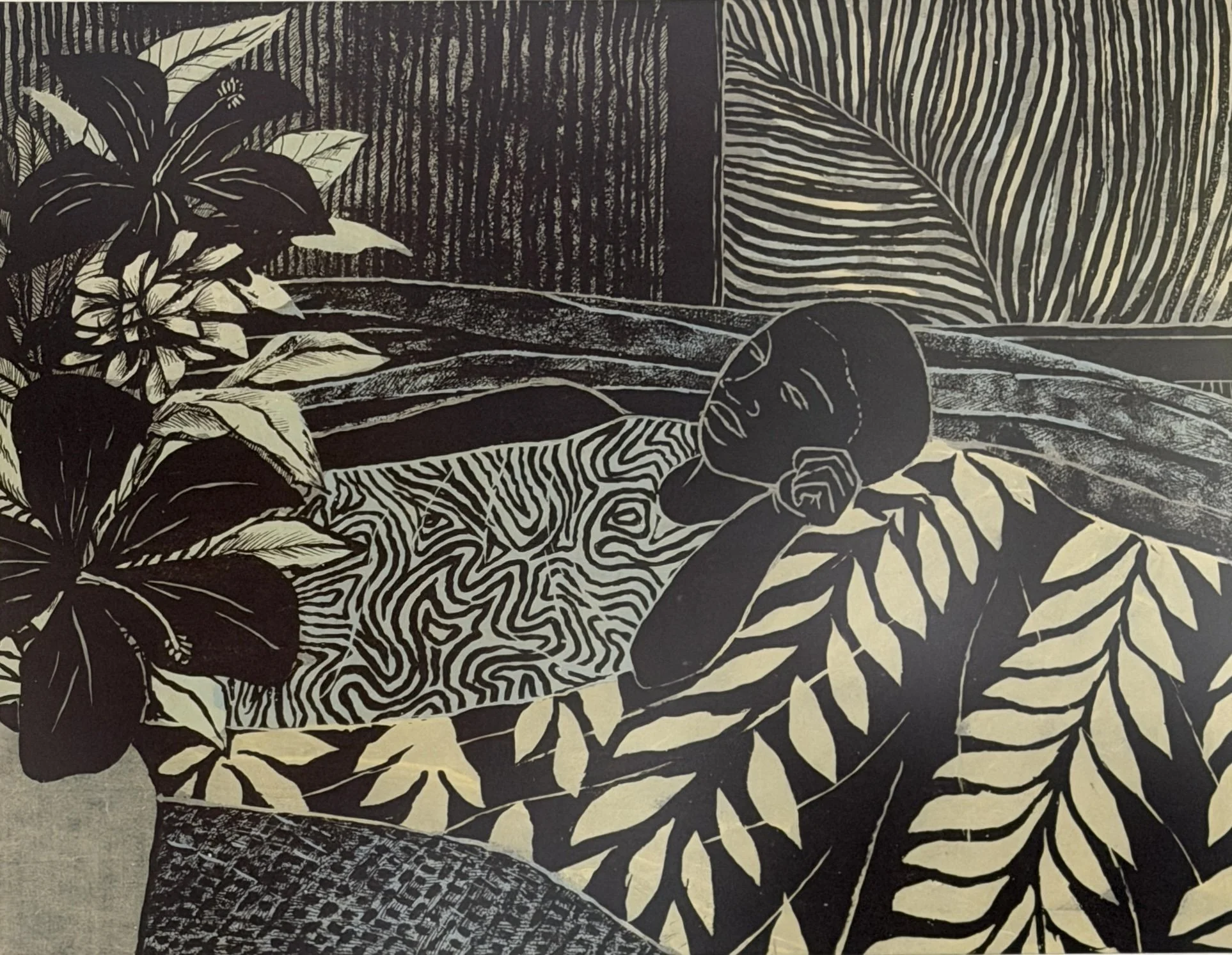
A limited edition print (17 of 35) by well known Australian artist Ray Crooke. Photo - Courtesy of Anne Whately Private Collection.
I also have a David Hockney print — Nichols Canyon, one of his most recognisable California landscapes. It earns its place completely.
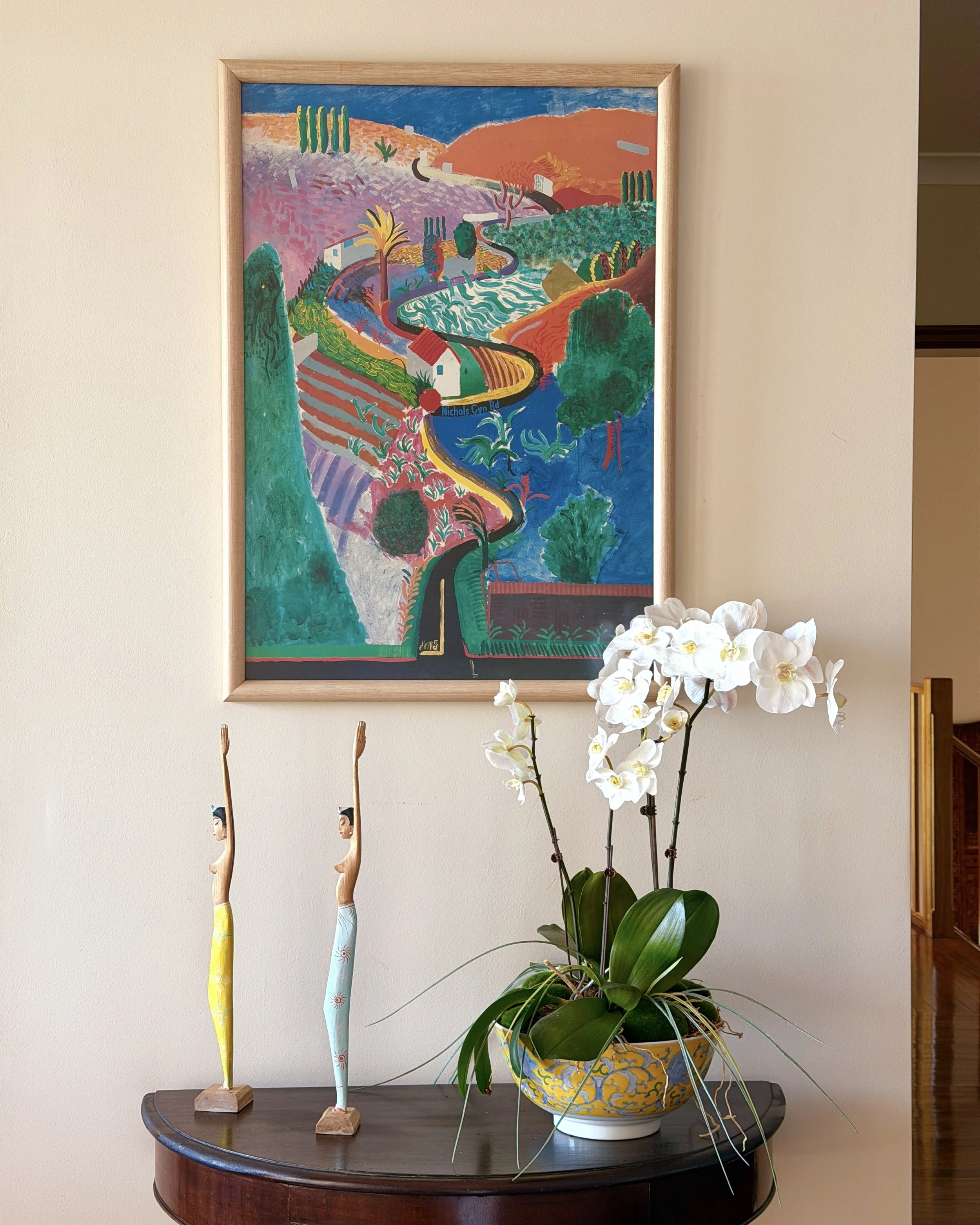
David Hockney “Nichols Canyon’ print. Photo- Courtesy of Anne Whately Private Collection
But standing in front of one of my Van Tho originals is a different experience entirely. I collected three of his works — the first discovered walking past a small gallery in Hanoi, two more from the Green Palm Gallery in Ho Chi Minh City. Each one stopped me in my tracks.
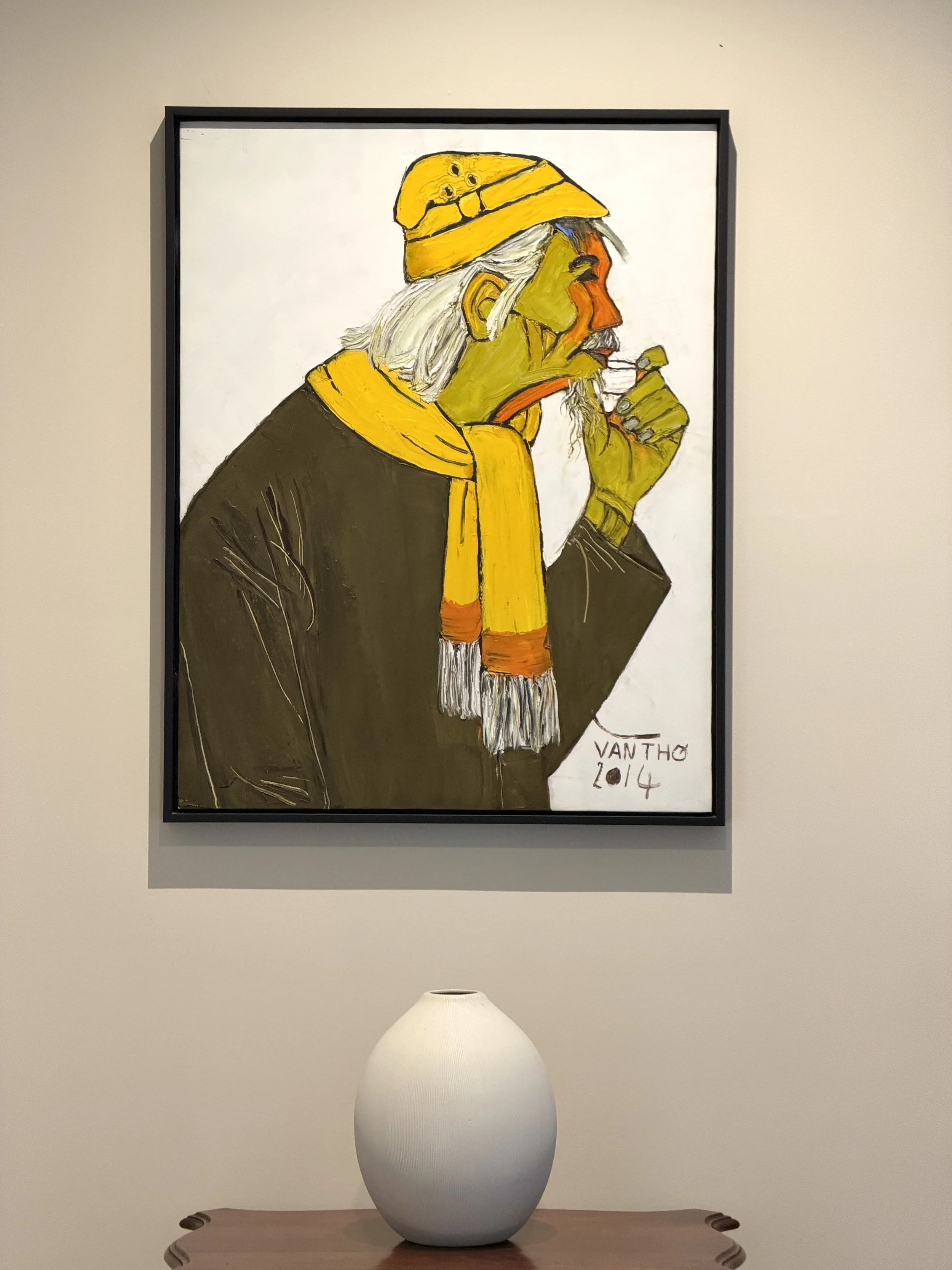
Vietnamese Artist Van Tho. Photo- Courtesy of Anne Whately Private Collection
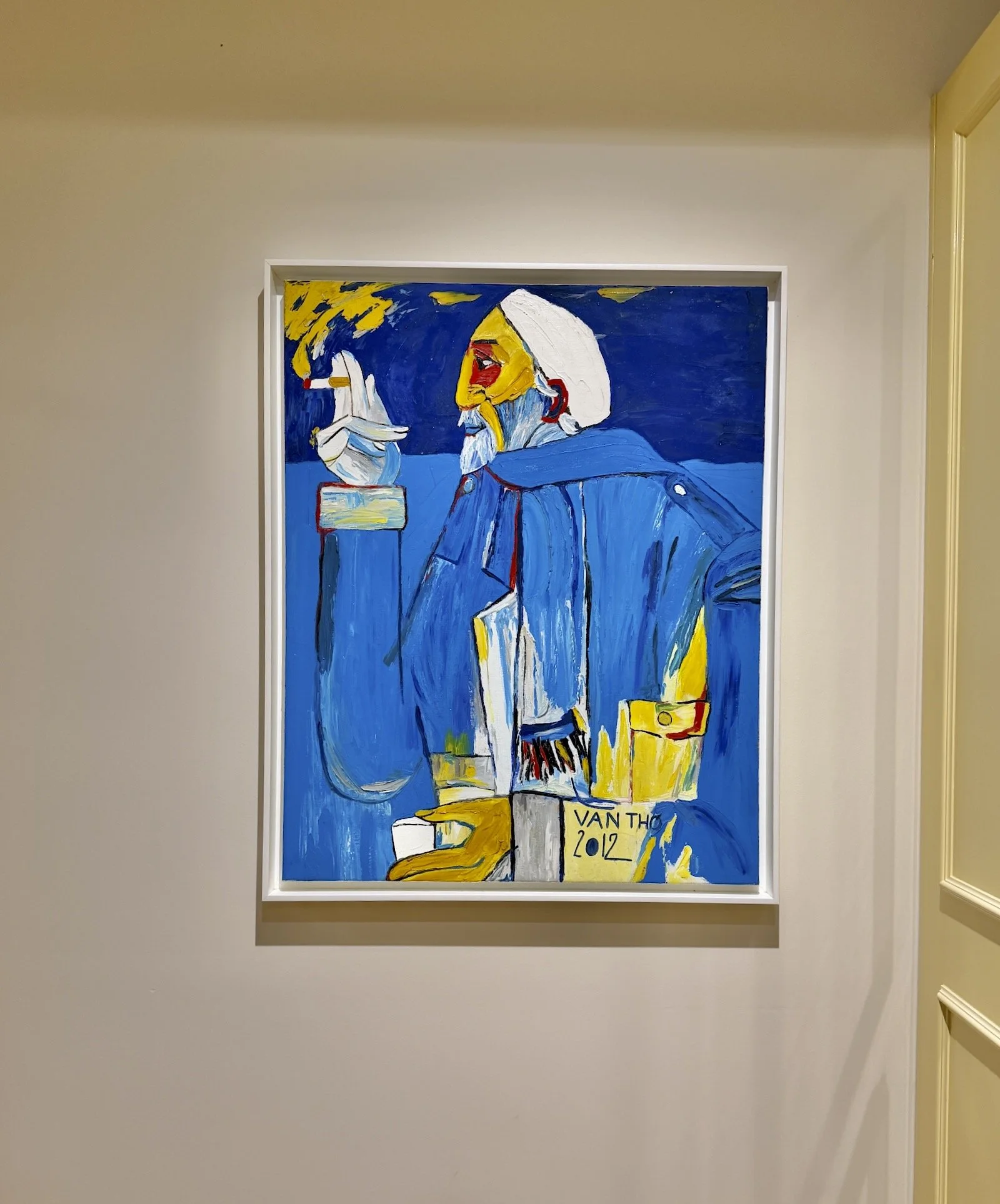
Vietnamese Artist Van Tho. Photo - Courtesy of Anne Whately Private Collection.
Prints have their place — especially limited editions by significant artists.
But if you're building a collection, originals are where the real relationship with art begins.
We cover this in much more depth in a future separate article — worth reading before your first purchase.
Buy directly from the artist when you can.
When you buy through a gallery, typically 40–50% of the price goes to the gallery. When you buy directly, the full amount goes to the person who made the work.
But it's not just about money.
Buying directly gives you access to the story. You can ask questions — what the painting is about, what materials were used, what the artist was thinking. That conversation becomes part of what you own. It's something you simply can't get from a shop floor or an online marketplace.
Most artists sell through their own websites now.
Many have email lists where new work goes to subscribers first, before it's made public.
If you find an artist whose work moves you, getting on their list is often the best way to access new pieces before anyone else.
When you buy through a gallery, typically 40–50% of the price goes to the gallery. When you buy directly, the full amount goes to the person who made the work.
But it's not just about money.
Buying directly gives you access to the story. You can ask questions — what the painting is about, what materials were used, what the artist was thinking. That conversation becomes part of what you own.
Most artists sell through their own websites now.
Many have email lists where new work goes to subscribers first, before it's made public.
If you find an artist whose work moves you, getting on their list is often the best way to access new pieces before anyone else. There’s no pressure to buy.
Let it grow on its own terms.
Nobody builds a collection in an afternoon.
The best ones accumulate slowly — each piece chosen because it earned its place. You buy one work, live with it, and start to understand what you're drawn to. Then another follows, maybe from the same artist, maybe from someone completely different. Over time the collection develops a personality. Not because you planned it that way, but because every choice was genuinely yours.
One of the most satisfying things I've done as a collector was acquire Eula Jensen's entire Boulders series — three works that were always meant to be seen together, now hanging exactly as she intended.
[PHOTO 1 — Eula Jensen, The Boulders triptych in situ]
There's no correct way for a collection to look.
Some people collect within one style or medium. Others collect across decades and disciplines with no thread except that every piece meant something when they bought it.
Both are valid. Both produce walls worth looking at.
The only mistake is waiting until you know more, have more space, or have more money.
You know enough now. Start with one piece.
A couple of practical tools worth knowing about.
Before you buy, it helps to see how a piece might look in your own space.
ArtPlacer is a free app and is built specifically for visualising art on walls — you use your phone camera to see a piece in your room in augmented reality. It's the most useful app available for this and worth downloading before you start browsing seriously.
Save or screenshot any painting from an artist's website or Instagram and upload it directly. Most artists also show work in room settings on their website, so that's always a good starting point.
Ready to start?
Browse original paintings at Whately Art— or join the Collector's Circle subscription to receive new work directly to your inbox before it goes public.
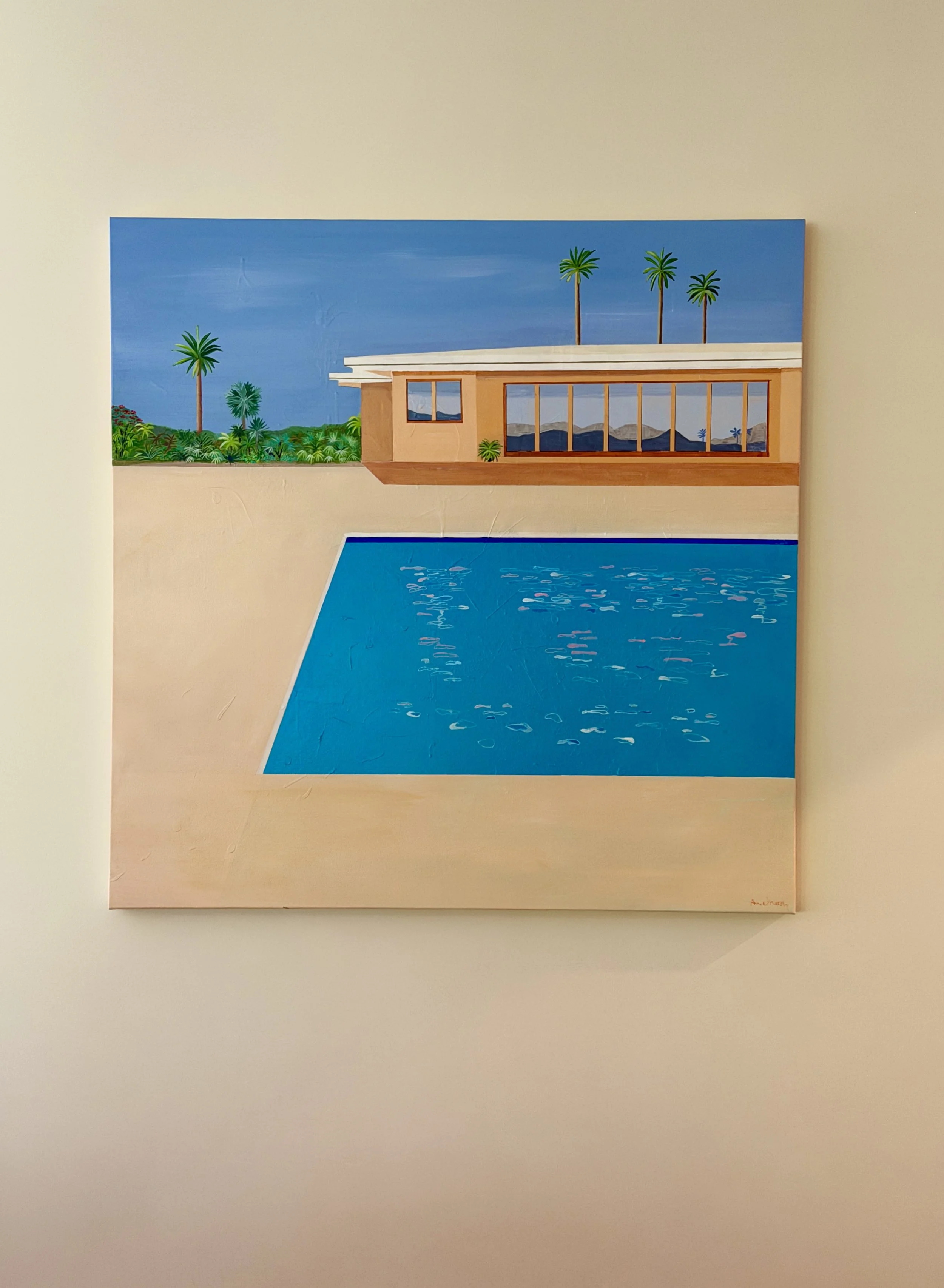
The Homestead. Original painting by Artist Anne Whately. Photo Courtesy of Anne Whately.
Credits:
Eula Jensen — The Boulders series, original works
Fran Hosker — @franhoskerart
Ray Crooke — limited edition print
Van Tho — original paintings, Green Palm Gallery, Ho Chi Minh City
David Hockney — Nichols Canyon, print
House with Pool painting — Anne Whately, whatelyart.com