
Why you don't have to commit to one big painting.
There's something wonderful about a gallery wall — or a salon wall, if you prefer the term. Done well, it tells a story: a little collection of moments, colours and things you've fallen for over the years, gathered into one place. It can become the heart of a room.
One of the things I love most about them is how forgiving they are. A gallery wall takes all the pressure off committing to a single large piece of art. Instead of one big decision, you're making lots of small, happy ones. And because the eye is drawn around the whole grouping rather than resting on any single work, you can mix all sorts of things together — original paintings, prints, photographs, posters, even your children's drawings. It's a generous, relaxed way to fill a blank wall.
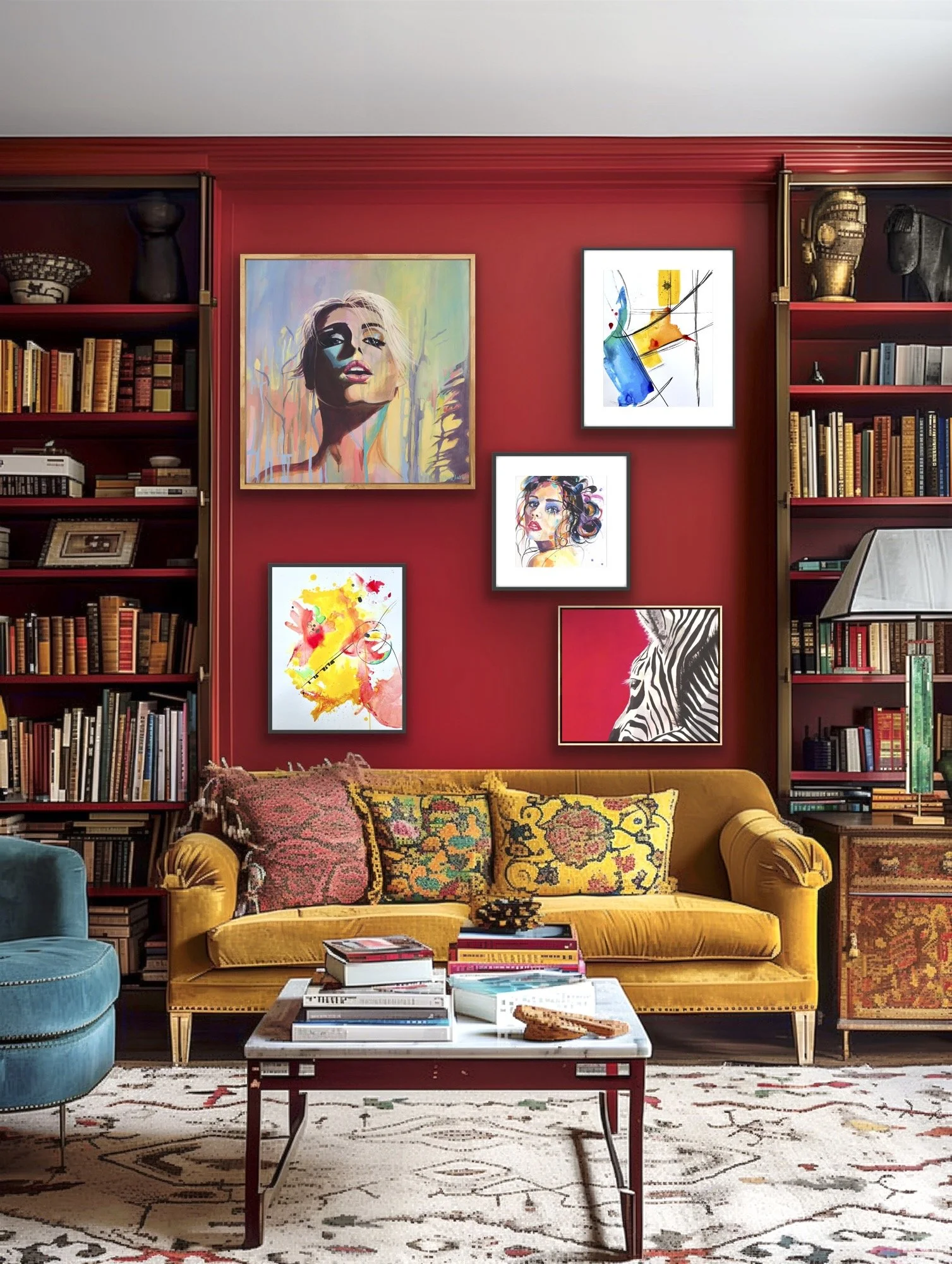
A gallery wall doesn't have to match the room — sometimes the best ones gently argue with it. All artwork by Anne Whately
Here are my thoughts on creating a gallery wall that feels considered, personal and entirely you.
Start with what you love
Before you think about layout, gather the pieces that genuinely speak to you. Originals, prints, photographs, even framed textiles or small objects — anything with meaning.
Don't worry yet about whether they "go together." A gallery wall thrives on personality, and the pieces you love tend to find their own harmony.
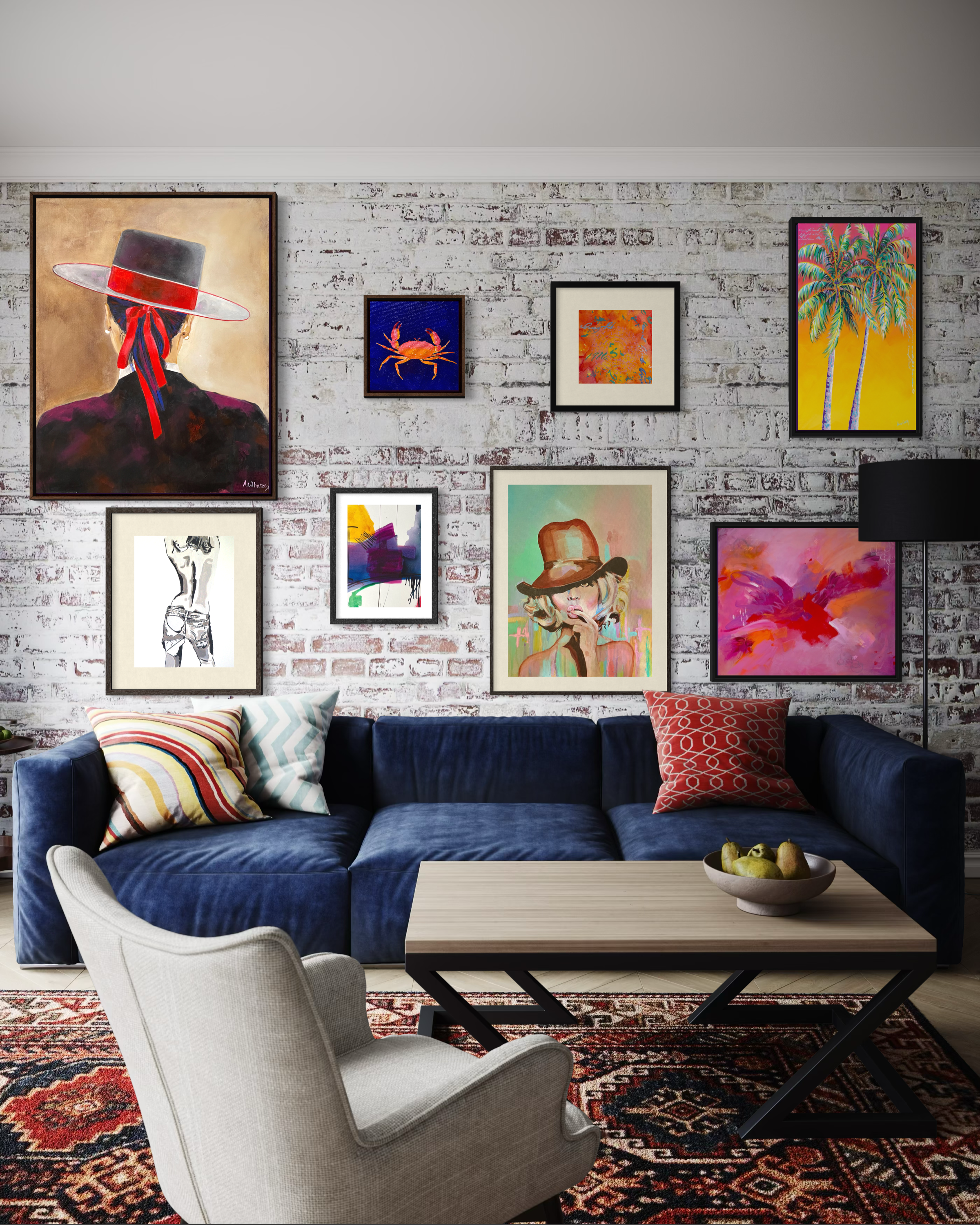
Start with the pieces you love. The mix sorts itself out. All artworks by Anne Whately
Let frames do the cohesive work
Here's a little secret: completely unrelated pieces can suddenly feel like they belong together simply by sharing the same frame colour. A row of mismatched prints, photos and sketches becomes a collection the moment you put them all in matching black, white or natural timber.
It's one of the easiest ways to bring order to an eclectic mix without losing any of its charm.
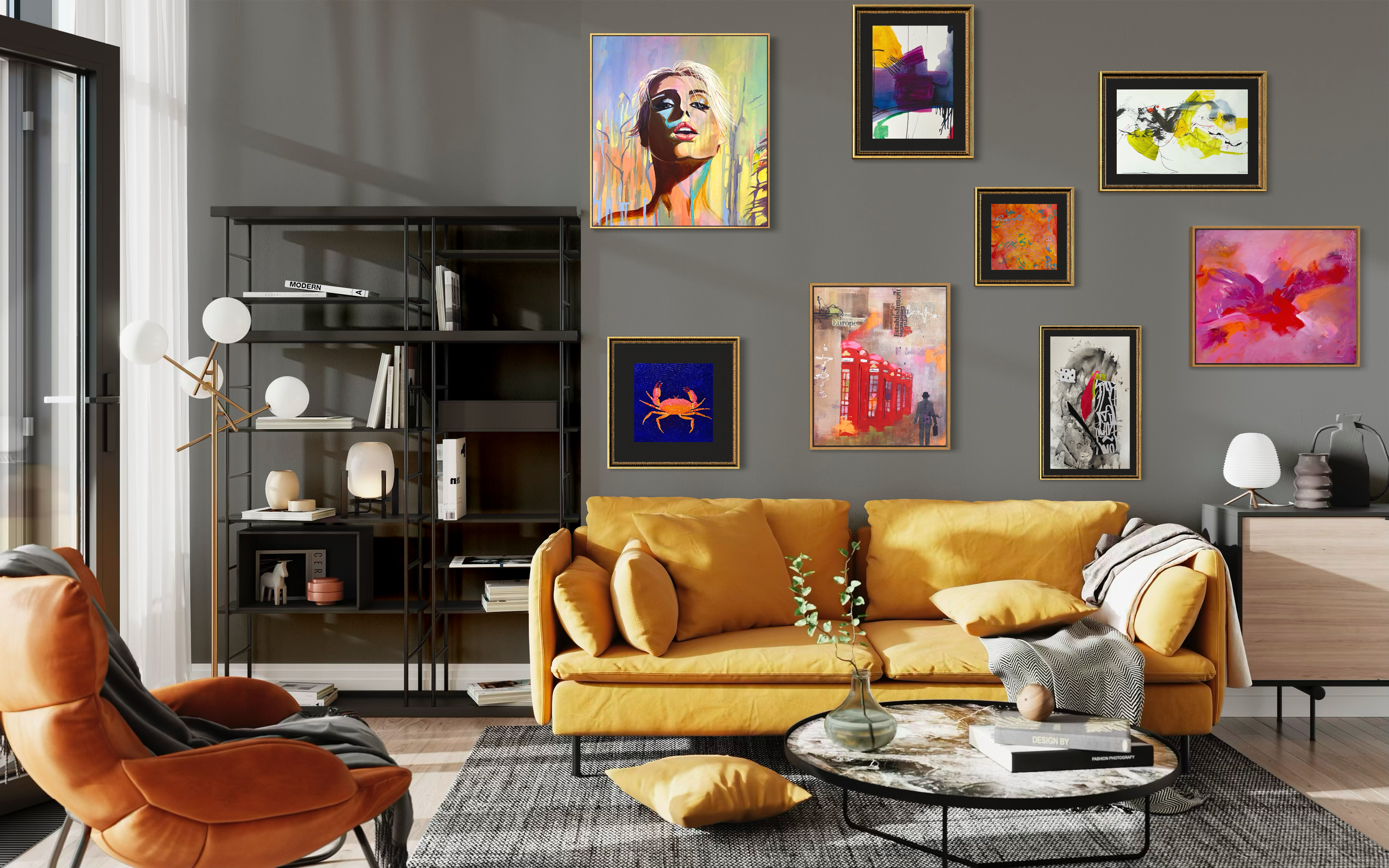
Completely different works, one frame colour — and suddenly they belong together. All artwork by Anne Whately
Add depth and texture
A gallery wall doesn't have to be flat. Plates, small sculptures, woven pieces and other three-dimensional objects that fix to a wall lend lovely depth and texture.
Mixing dimensional pieces among all that flat glass gives the eye somewhere to rest, and makes the whole grouping feel collected rather than catalogued.
Plan before you pick up a hammer
Lay everything out on the floor first and shuffle it around. It costs nothing and saves you from a wall full of unnecessary holes.
Better still, cut paper templates the size of each frame and Blu Tack them to the wall. Label each template so you know what’s what. It's the easiest way to judge spacing and balance before committing.
Think about balance, not symmetry
A gallery wall needn't be perfectly even. Anchor it with a larger piece, then build outward, letting smaller works orbit around it.
Keep the gaps between frames fairly consistent, so the grouping reads as one composition rather than scattered fragments.
If you'd like a bit of structure to your arrangement, try working to a loose shape. Keeping the outer edges of your grouping to a rough rectangle or square gives a tidy, contained look.
For something a little softer, arrange the pieces within a wide diamond — larger works in the centre, smaller ones tapering out toward the points. It still feels considered, just less rigid.
The shape is only a guide, not a rule — but it's a helpful way to stop a wall drifting outward with no clear edges.
Mix with confidence
Don't be afraid to combine styles, frames and subjects. An abstract beside a portrait beside a quiet little sketch can be far more interesting than a matched set.
When I'm deciding whether a piece belongs, I ask myself — "is this one happy next to these others?" It's a surprisingly good test, and usually you know the answer straight away.
Keep it calm if you prefer
A gallery wall doesn't have to be loud. If your taste runs quieter, let one colour family run softly through the whole grouping, or hang a simple set of three in matching frames.
It's the same idea, just dialed down — cohesion through a shared palette rather than a shared frame.
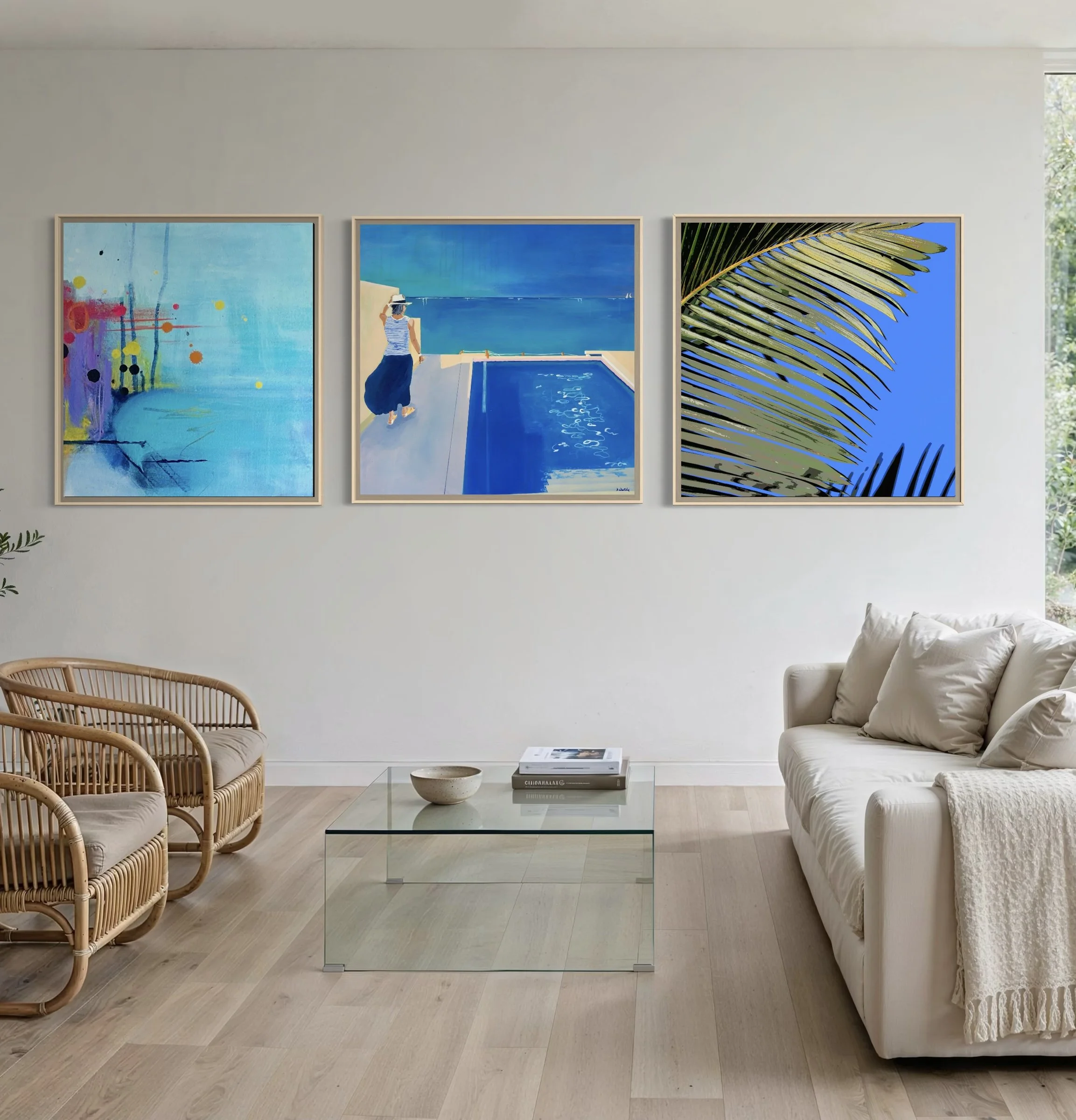
Prefer something quieter? Let one colour carry the whole grouping. All Artwork by Anne Whately
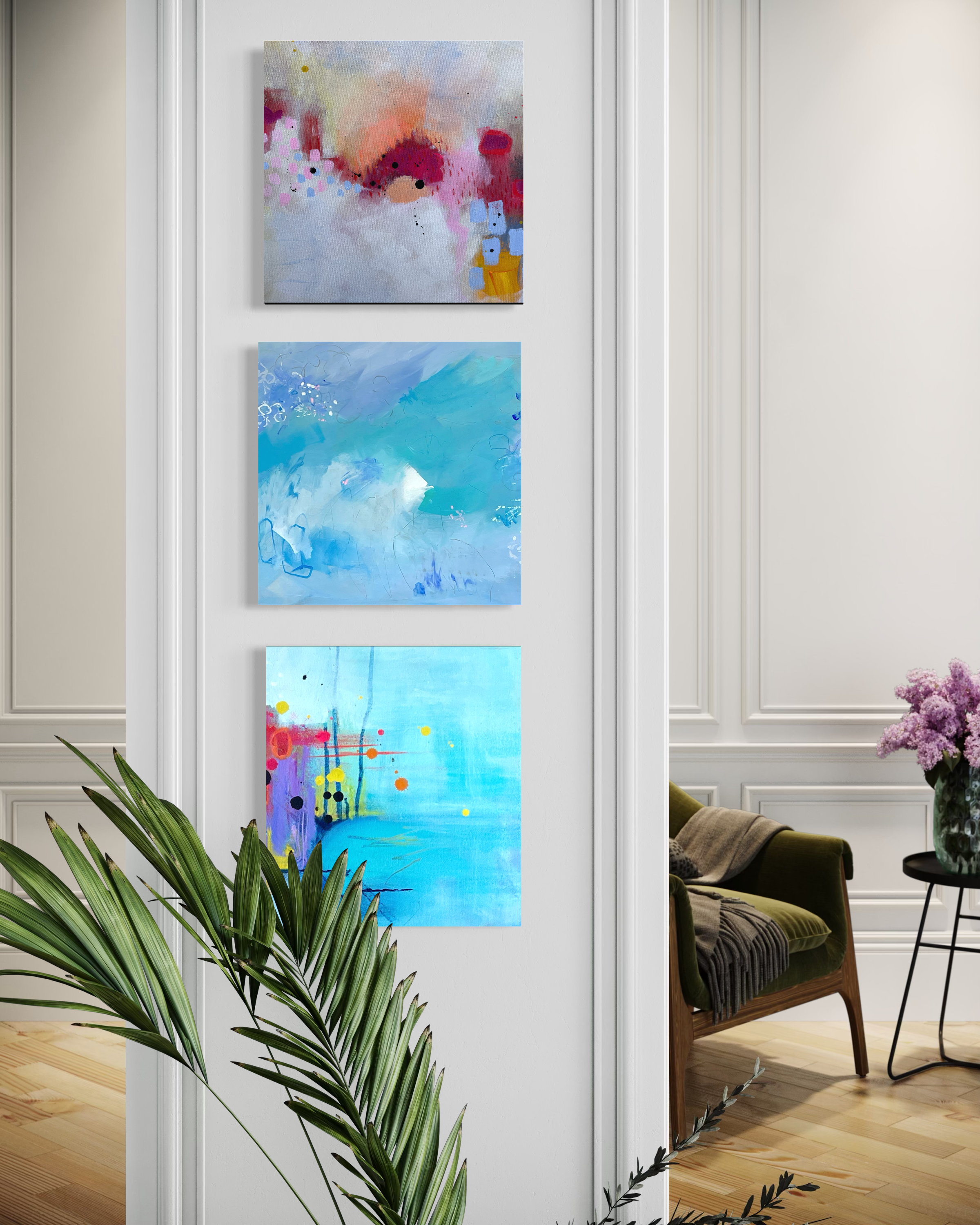
A simple stack of three in a shared palette — cohesion without the fuss. All Artwork by Anne Whately
Light it beautifully
Lighting changes everything. A well-placed picture light or a softly directed lamp adds warmth and drama, while poor lighting can flatten even your favourite piece.
Where you can, keep originals out of long hours of direct sunlight to protect them over time.
Let it grow
The loveliest gallery walls are rarely finished in a day. Leave a little room to add new finds as you collect them — a wall that evolves always feels more alive than one assembled all at once.
A gallery wall is really just a collection of things you've chosen to live with, brought together with a bit of care. Trust your eye, take your time, and don't be afraid to break a rule or two along the way. That's usually where the personality comes from.
To see available original works, click here.