
How to Frame Artwork Beautifully: An Artist’s Tips On Framing Your Artwork
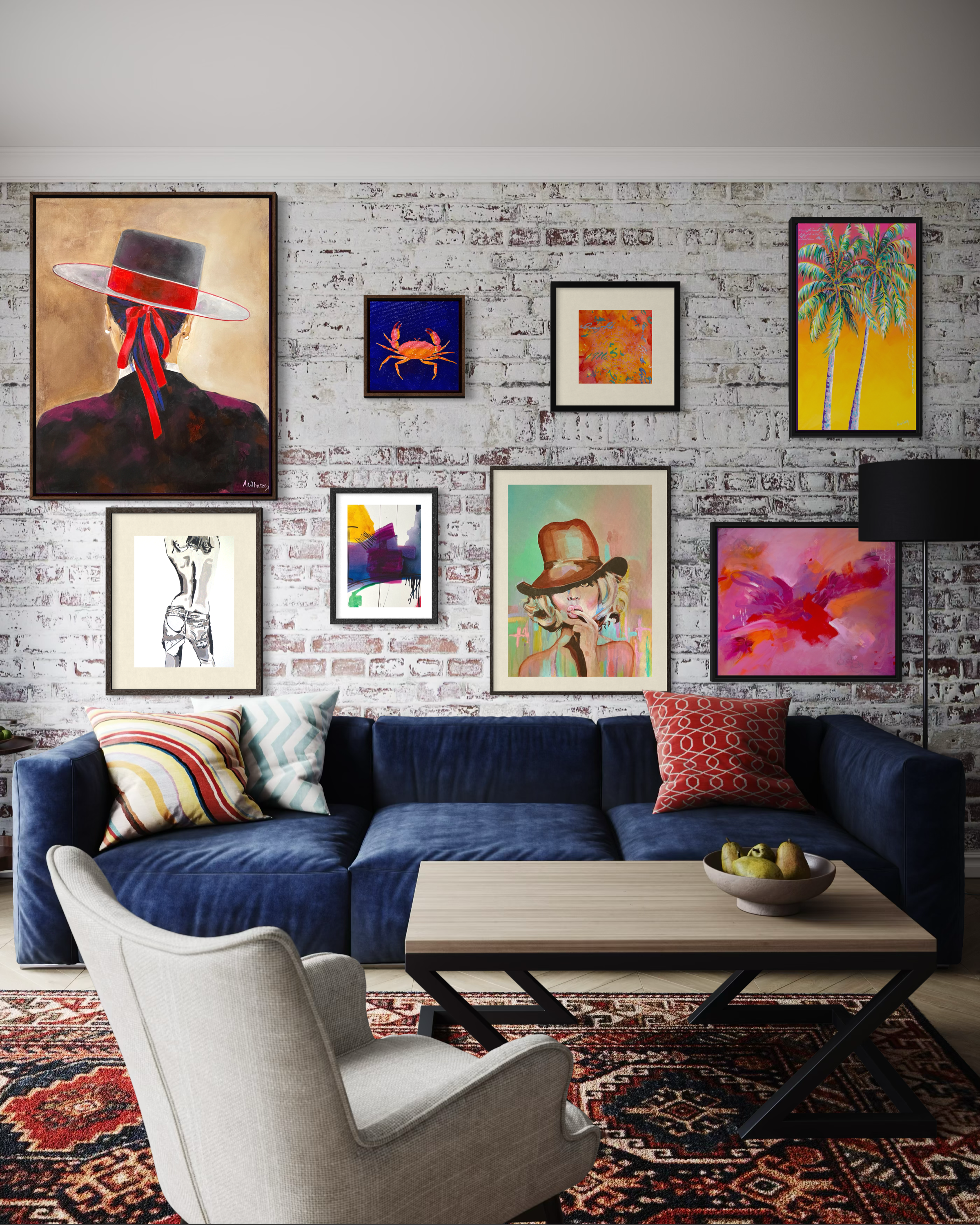
An art wall showing how different pieces can work beautifully. All Art by Anne Whately
How do I frame my artwork?
You’ve had your eye on a beautiful piece of art for a while and finally decided to take the plunge and buy it.
Congratulations.
You now have something beautiful to enjoy for many years — and probably the perfect spot for it too.
So now comes the framing.
One of the joys of buying original artwork is that you can frame it in a way that truly suits both the artwork and your home, rather than settling for a ready-made frame that may not do either justice.
You get to choose the colour, material, profile and overall feel.
A good framer can help enormously, but a little research beforehand also makes a big difference. Too often framers suggest very “safe” options that may not necessarily suit your style or the artwork itself.
I’ve framed many artworks over the years — some more successfully than others — and learned a few valuable lessons through trial, error and occasionally spending more money than intended.
So here are a few tips to make the process easier.
Mat-boards.
Mat-boards create a visual resting space around artwork and can really help a piece stand out. They don’t always have to be white or light coloured. Consider the artwork, the frame and even the wall colour the piece will hang against.
Double mats can make a simple frame look far more refined and expensive. This is where the top mat opening is slightly larger than the bottom one, creating subtle depth and detail.
Also consider having a slightly deeper mat at the bottom rather than making all sides perfectly equal. This often works beautifully with smaller works.
Mats are commonly used for prints, works on paper, photographs and textile pieces. They can make smaller artworks feel much more substantial and impactful once framed.

Screen print from my private collection by Erin Brady showing triple mat-boards with a heavier bottom section giving the piece beautiful weight.
Frames.
Consider both your decorating style and the personality of the artwork when selecting a frame.
If you’re creating an art wall with many different pieces, using a consistent frame style can help tie everything together beautifully. They don’t need to be identical — even keeping to one colour family can create cohesion.
Generally, the frame itself should remain visually lighter than the mat-board so the artwork remains the focus.
If the artwork will hang near other pieces, try to ensure the frames work together rather than competing with one another.
If it’s a feature piece, think about scale carefully. A frame can dramatically increase the visual impact of an artwork and help it fill a space more confidently.
It’s always helpful to take photos of your room and wall colours to your framer so your selections work well with the surrounding space.
Canvas paintings can be framed in many ways, or simply hung unframed. Many contemporary canvases look beautiful without a frame at all.
Float or tray frames are especially popular at present, and for good reason. They’re clean, minimal and don’t require glass. A small gap between the artwork and frame creates the illusion that the canvas is “floating,” which works beautifully with contemporary paintings.
Aluminium frames can also look surprisingly good with the right artwork, particularly in modern or minimalist interiors.

‘Seafoam’ in a timber floater frame. Original artwork by Anne Whately

Coloured aluminum frames can be exciting and fresh. Artworks by Anne Whately.
Glass for frames.
Acrylic and oil paintings on canvas generally don’t require glass.
Works on paper, photographs and delicate artworks are usually much better protected behind glass, especially in bright or humid environments.
I personally prefer non-reflective glass where possible, particularly in rooms with strong natural light. It reduces glare beautifully and allows the artwork to remain visible from different angles.
Different types of glass
Clear Glass — highly reflective, commonly used in standard framing.
Non-Reflective Glass — reduces glare and works well in brightly lit rooms.
UV Glass — helps protect artwork exposed to sunlight.
Conservation Glass — ideal for prints, photographs and valuable paper works needing additional protection.
Museum Glass — premium glass with excellent UV protection and very low reflection.
Clear Acrylic — lighter than glass and useful for oversized frames.
UV Low Reflective Acrylic — ideal for delicate works such as charcoal or pastel pieces.

Artwork using non reflective glass. There’s very minimal reflection allowing the art to be seen clearly from all angles. Original artwork -private collection of artist - Anne Whately
Final tips
Bold framing can make artwork feel far more commanding and intentional.
Research styles beforehand and take photos of frame samples while visiting your framer. It’s much easier to make decisions later when you can compare options properly at home.
And don’t be afraid to think slightly outside the square.
Most importantly, discuss budget with your framer before getting too carried away with choices. Framing can become expensive surprisingly quickly — something I know from experience.
